

There is a question that most of us ask so frequently, so automatically, that we have stopped recognising it as a question at all. It has become a reflex — a habit of the nervous system — woven into how we make decisions, how we dream, how we exist.

The question is this:
Am I allowed?
Am I allowed to want this? Am I allowed to try this? Am I allowed to leave, to speak, to become something different from what everyone around me expects?
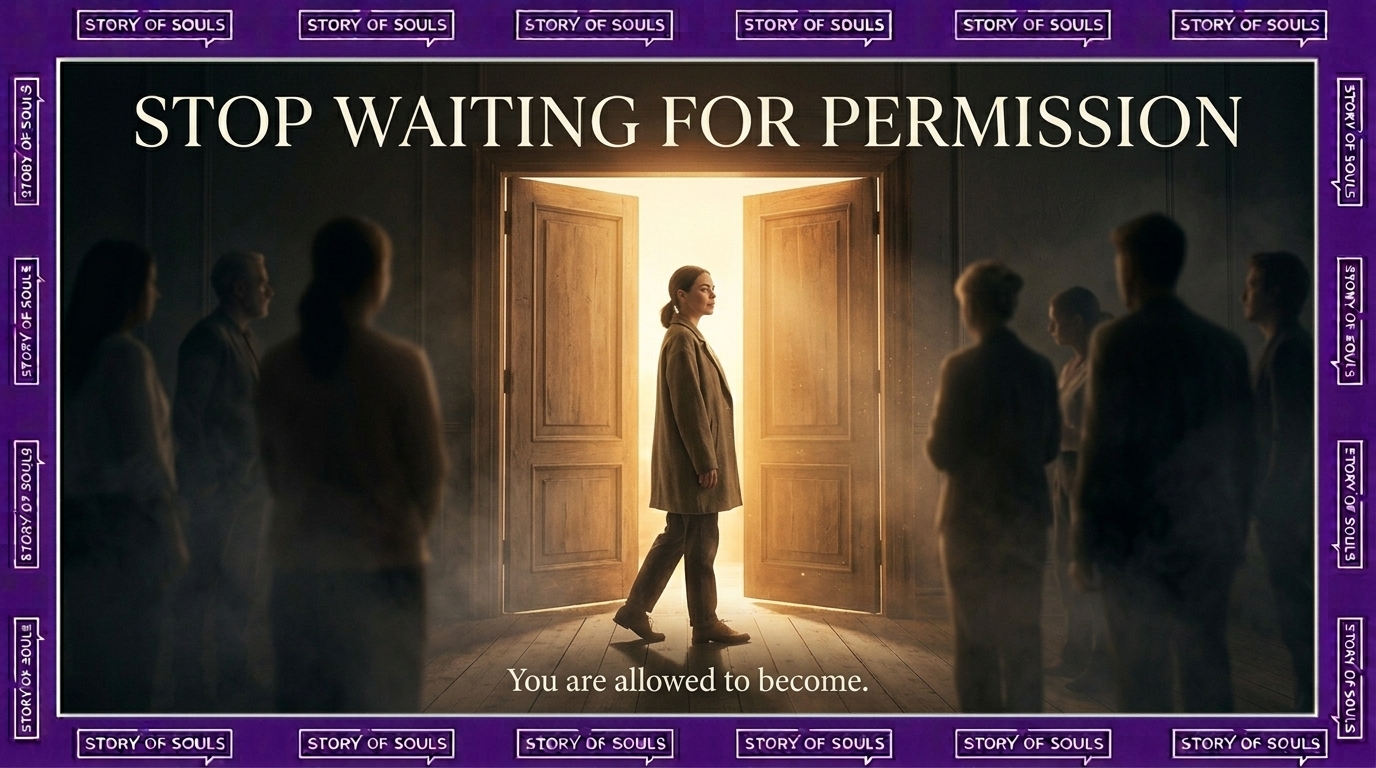
Sometimes we ask it out loud — to our parents, our partners, our elders, our bosses, our closest confidante, or sometimes, extraordinarily, to a stranger whose energy we read as permission-granting. Sometimes we don’t ask it at all. We simply wait. We wait for someone to nod, to encourage, to say yes, go ahead — before we allow ourselves to begin.
And here lies one of the quietest tragedies of a human life: the life that was never lived because the permission never came.

What Is Approval-Seeking Behavior?
Approval-seeking behavior is the pattern of consistently looking to others — parents, partners, bosses, peers, or even strangers — for confirmation before acting, deciding, or becoming.
It goes beyond wanting a compliment. It means your sense of self-worth, your direction, and your willingness to move forward are contingent on someone else’s yes. Psychologists link this to what is known as external validation — using other people’s opinions as the primary measure of your own value and competence. When this becomes a pattern, it shapes not just individual decisions but the entire architecture of a person’s identity.
Two Patterns. Two Kinds of Lives.
Let us be honest about two distinct patterns that exist in human beings — not as a judgment, but as a mirror.
The first kind moves through life seeking permission at every threshold. Before any significant choice, there is a consultation — with parents, with society, with the imagined opinion of people who may not even know them well. They are not unintelligent. They are not unfeeling. In fact, they often feel too much — they are acutely sensitive to the approval or disapproval of those around them, and they have learned, somewhere early in life, that their own inner voice is not enough.
When someone says yes, they move forward — but always carrying the awareness that the yes came from outside. When someone says no, they stop. Not always completely. The desire goes underground, buries itself, and continues to exist in the body as a kind of low, persistent ache.
The second kind moves from the inside out. They dream, they decide, they do. Not recklessly — but from a centre that belongs to them. They are not chasing applause. They are not building a life for an audience. They are simply, stubbornly, in love with what they are building, and that love is enough to keep them moving even when the world has not yet affirmed them.
Neither of these patterns arrives fully formed. Both are built — slowly, inevitably — from the very earliest experiences of being human.
Why Do People Seek External Validation?
People seek external validation primarily because, at some point in their development, they learned that their own inner sense of worth was unreliable or unsafe.
This often begins in childhood — through parenting styles that were controlling, emotionally inconsistent, or conditional in their praise. When a child receives love and approval only when performing to a certain standard, approval becomes psychologically fused with survival. The child grows up associating their value with what others think of them — and that wiring does not simply dissolve in adulthood.
Additional triggers include bullying, emotional neglect, perfectionism anxiety, people-pleasing environments, and cultural norms that reward conformity and penalise independence.
How Controlling Parenting Shapes the Need for Approval
When a child is raised by controlling parents — not necessarily cruel, but controlling — something quietly fundamental shifts in the architecture of that child’s inner world. Controlling parents, in their fear or their rigidity or their deeply held belief that they know best, send a consistent message: your instincts are not reliable. Check with me first. Without me, you will go wrong.
They do this with love, often. That is what makes it so difficult to see.
They do it by overriding the child’s choices — what to wear, what to study, who to befriend, what to dream of becoming. They do it by making the child feel that independent thought is a kind of ingratitude. They do it by being the loudest voice in every room until the child’s own inner voice becomes so quiet it is almost inaudible.
And then, the cruelest part: the child grows up, leaves the home, enters the world — and discovers that the controlling parents have never actually left. They are inside. Their voices have become the child’s own internal monologue. This adult does not need anyone else to say no — they have learned to say it to themselves, efficiently and pre-emptively, before they even attempt to want something that hasn’t been sanctioned.
They approved of the performance. The real self is still waiting, somewhere inside, having never quite been allowed to come out.
This adult will spend their life seeking surrogate parents — in bosses, in partners, in friends — anyone who can provide the external yes that their own interior cannot seem to generate. They will alter themselves endlessly: their opinions, their aesthetics, their ambitions, their personalities — all in service of becoming the version that earns approval.
What Gets Buried — And What It Does to You
Here is something rarely said clearly enough: unfulfilled desires do not simply disappear when you suppress them.
They go underground. They live in the body, in the unconscious, in the choices you make about everything else. And they do damage — not loudly, not all at once, but consistently and deeply.
The person who never pursued what they truly wanted will often pour that thwarted energy into judgment of others who did. They become, without intending to, people who diminish the dreams of those around them — because the sight of someone else freely becoming what they always longed to be is unbearable in ways they cannot always name.
They also bring a certain hollowness to everything they do pursue. Because the thing they actually wanted remains undone, unacknowledged, untried — every other achievement carries an asterisk. Yes, I am successful, but. Yes, I am loved, but. Yes, I have built something, but it was never this.
The confidence that develops is thin and conditional — contingent on continued validation. Remove the applause and the structure collapses. This is not weakness of character. This is the entirely predictable outcome of having learned that you are only as real as others confirm you to be.
The Cost of the Other Side: When Freedom Has a Price
Now let us speak honestly about the free ones — those who operate without seeking permission, who move from desire to action without waiting for the world to nod.
There is something undeniably magnetic about such people. When you meet them, you feel it immediately. They speak differently. They carry themselves differently. There is a groundedness in them that has nothing to do with arrogance and everything to do with the simple fact that they are not spending any energy managing your opinion of them.
This kind of person tends to create things that last. Not because they are more talented, but because they are more committed — committed to the work itself rather than to the reception of the work.
But the free life has its own costs, and we must be honest about them. Freedom, especially in its early stages, is economically vulnerable. The pull between what the soul wants and what the body needs — food, shelter, security — can feel brutal. The answer is not to choose one absolutely over the other but to begin early. A young person who is permitted to explore, to experiment, to discover what genuinely moves them before the full weight of adult obligation settles in, arrives at adulthood already knowing something about who they are.
This is why conversations about parenting and autonomy are not academic. They are among the most consequential conversations a society can have.
The Illusion at the Top: Control Wears Many Faces
Here is the part that most people do not talk about — not even those who celebrate freedom and authenticity.
Even those who escape the approval-seeking patterns of childhood, who build something remarkable from a place of genuine desire, who rise to levels of visibility and influence — even they eventually encounter a new and more sophisticated form of control.
The world, at scale, does not like pure autonomy. It never has. Because a person who does not need validation cannot be leveraged. A person who does not chase approval cannot be manipulated into silence. And so institutions, industries, markets, even movements find subtler ways to bring that person in line. They offer platforms with conditions. Resources with strings. Belonging to communities that require certain conformities as the price of entry.
Control is not always a fist. More often, it is an embrace — warm, generous, and quietly suffocating.
Recognising this is not cause for despair. It is cause for clarity. Because you cannot navigate what you cannot name.
What Is Self-Permission — And Why Does It Matter?
Self-permission is the act of authorising your own desires, choices, and becoming — from the inside, without requiring external approval first.
It is not arrogance or recklessness. It is the decision to treat your own inner knowing as a credible, trustworthy source of guidance. The permission that actually matters is the one you give yourself.

This is harder than it sounds. Because giving yourself genuine permission requires trusting your own interiority. It requires believing your desires are real and worth honouring. It requires a willingness to be wrong, to look foolish, to fail publicly — and without the consolation of having tried only because someone else told you to.
When someone external gives you permission and things don’t work, you have a buffer: I only did what I was told. When you give yourself permission and something fails, there is nowhere to hide. It was entirely, wholly your own. That nakedness is terrifying. And yet it is also the only soil in which a genuine life grows.
How to Stop Seeking Approval: A Practice, Not a Formula
Learning to stop seeking validation from others is not a one-time decision. It is a practice — a gradual, ongoing recalibration of where your sense of worth lives.
It begins not in grand gestures or dramatic declarations, but in small, private acts of fidelity to yourself.
It looks like choosing something — anything — because you want it, without first constructing a story about why it is socially acceptable.
It looks like noticing when you are about to ask someone else what you should feel, and choosing to feel it first on your own.
It looks like staying in a desire long enough to know whether it is truly yours, rather than immediately outsourcing its validity to someone else.
It looks like tolerating, gradually and with practice, the discomfort of not knowing whether anyone approves.
And it looks like asking, perhaps for the first time with real seriousness:
Who am I, when no one is watching? What do I want, when no one is keeping score? What would I build, if I knew the applause would never come?
These are not comfortable questions. But they are, ultimately, the only ones worth answering.
Frequently Asked Questions
What is the difference between seeking validation and seeking approval?
Seeking validation means wanting your feelings or experiences acknowledged as real and understandable. Seeking approval means wanting others to confirm that your choices, actions, or identity are acceptable or worthy. Validation is a healthier, more relational act. Approval-seeking, when excessive, places the power over your self-worth entirely in another person’s hands.
Is it wrong to seek approval from others?
No — occasional approval-seeking is a natural human impulse rooted in our social nature. The problem arises when it becomes the primary mechanism through which you determine your worth, make decisions, and construct your identity. At that point, it stops being social and starts being self-erasing.
Can approval-seeking behavior be changed in adulthood?
Yes. While the patterns often originate in childhood, they are not permanent. Self-awareness, therapy (particularly CBT and attachment-based approaches), mindfulness, and the deliberate practice of self-validation can meaningfully shift approval-seeking tendencies at any age.
What is people-pleasing and how is it related to approval-seeking?
People-pleasing is a behaviour pattern in which a person consistently prioritises others’ needs, preferences, and comfort over their own — often to avoid conflict or rejection. It is closely linked to approval-seeking but not identical: people-pleasers may not always be seeking praise, but they are consistently avoiding disapproval.
How do controlling parents affect a child’s self-worth in adulthood?
Children raised in highly controlling environments often internalise the message that their own instincts are unreliable. As adults, they may struggle with decision-making, low self-confidence, excessive need for external reassurance, and difficulty identifying their own desires separately from what others expect of them.

A Last Word
The child who was never allowed to choose is not lost. The adult who has spent decades seeking permission has not wasted an irrecoverable life.
The work of reclaiming your own authority over your own existence can begin at any age. It begins the moment you stop waiting.
Not for permission. Not for validation. Not for the world to rearrange itself into a shape that finally makes your authentic self feel safe to emerge.
You are allowed.
You have always been allowed.
The only question is whether you are ready to stop asking.
Story of Souls
A space where real stories live — not the polished versions, but the ones still being written, still being understood, still being courageously chosen.