

“This is simply how he is.”

We say it so readily, as though human nature were a fixed identity and understanding it were enough.
But a person’s nature is not confined to the person. It finds expression in every interaction, influencing how others feel, what they come to believe about themselves, and how they experience the world.
A harsh disposition can breed fear; a compassionate presence can restore trust. What we repeatedly express through our behaviour becomes part of another person’s experience—and sometimes, part of their life long after the encounter has ended.
Our nature is our own, but its consequences are rarely ours alone.
Its influence extends from childhood through relationships and across generations. Even after death, something of us may remain in the memories we leave, the values we pass on, and the changes we set in motion.
Yet there is an important distinction: understanding someone’s nature does not mean excusing its consequences. “That is simply how he is” may explain a pattern, but it does not make that pattern harmless or beyond change.
The deeper question, therefore, is not merely whether we are good or bad, but whether we are conscious of what our actions create.
Self-awareness begins with recognising our patterns. Wisdom begins when we see their consequences. Transformation begins when we stop treating those patterns as an excuse and start taking responsibility for them.
We cannot control every impression we leave, nor can we foresee every consequence of our actions. But we can become more conscious of the way we live, the way we treat others, and the effects we are willing to create.
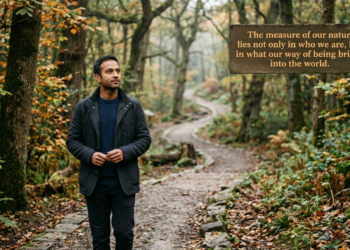
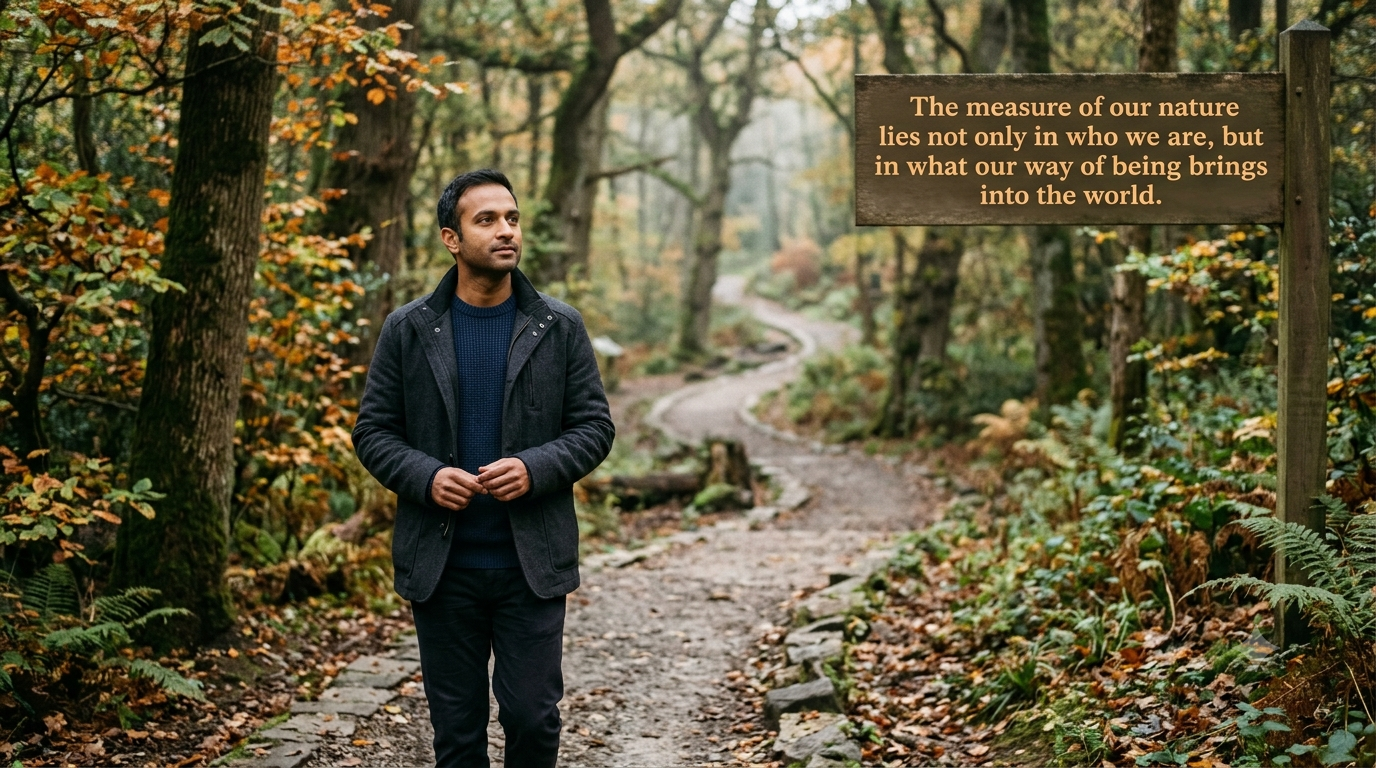
In the end, the measure of our nature lies not only in who we are, but in what our way of being brings into the world.
About Lovely Basantwani

Some writers write to tell a story. Some write to make you pause and listen to the conversation within.
Lovely Basantwani is a reflective writer whose words often explore the quieter sides of being human — self-discovery, solitude, healing, relationships, resilience and the courage to keep becoming.
His writing has a simple yet powerful quality. He speaks directly to the reader, reminding them that solitude does not always mean loneliness, silence is not always strength, and rejection does not have to define our worth. Whether he is writing about happiness, inner conversations, karma or resilience, his message often comes back to one simple truth — growth begins when we stop running away from ourselves.
Lovely Basantwani’s writing invites us to slow down, look within and listen to the voice we often overlook — our own.
About Story of Souls
Leave your comments on how you like this story. If you love it, share it to bring that change we wish to see in the world.
You can also share your inspiring story with us at submitstories.storyofsouls@gmail.com. Story of Souls is an initiative where we invite people to bring their stories to us. We want people to “write to heal.” The idea of Storyofsouls is appreciated by ALL INDIA RADIO. An Online Platform where you can share your real-life stories. The impact of our stories has reached the UN and Harvard University. For some real-life stories, web series are also planned. You can also visit our YouTube channel. You can follow us on Facebook LinkedIn Instagram.
Storyofsouls is glad to inform you that we are now a Google News-verified platform.
We are proud to inform you all that storyofsouls.com is the official TEDx MotiJheel Kanpur Partner for their upcoming event.