



There is a pattern to how human beings accept the new. We resist it first. We name it strange, call it alien, build walls in our minds around it. The brain, ancient and cautious, flags the unfamiliar as threat. So we recoil for a while.

Then something happens. We watch. We observe others not dying. We try, tentatively. And gradually, almost without noticing, the strange becomes familiar, the alien becomes furniture, and what once frightened us becomes the thing we cannot imagine living without.
This is not a story of weakness. It is the story of electricity, of the telephone, of radio and television, of the washing machine and the mixer. Each arrived to suspicion. Each left as necessity. The arc is always the same: strangeness, curiosity, comfort, dependency.
The Seduction of Ease
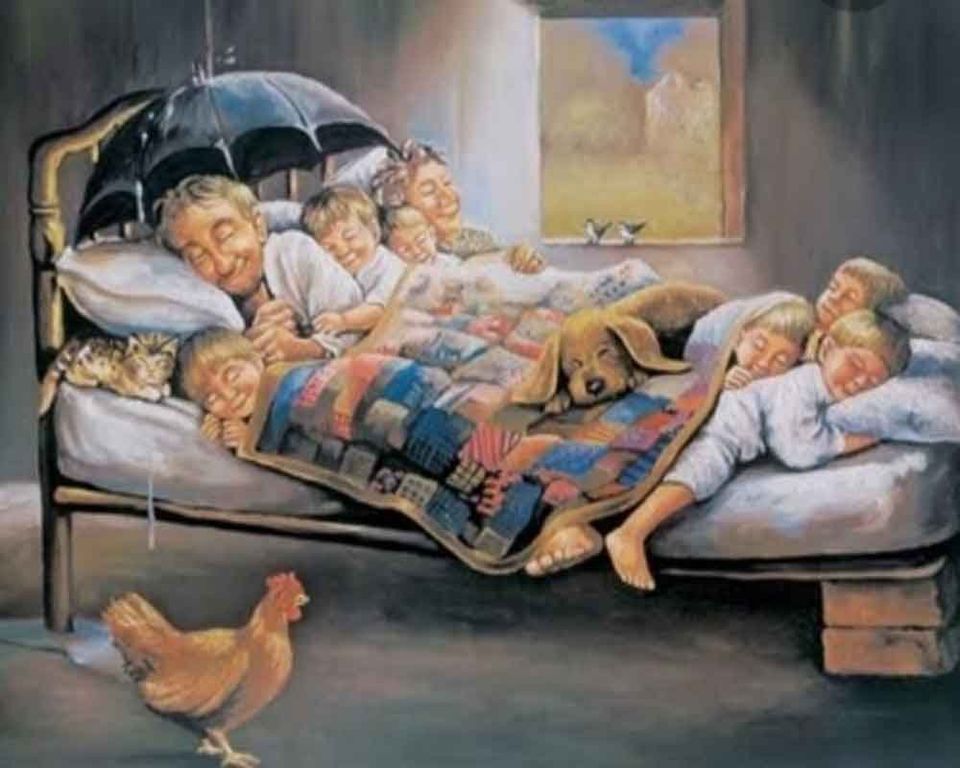
Comfort is not a neutral force. It is the most powerful persuader that has ever existed that is more effective than fear, more durable than ideology. When something makes your life easier, you do not merely use it. You begin to need it. Your muscles forget. Your memory outsources. Your tolerance for inconvenience shrinks.
This is what the great wave of domestic technology accomplished over the twentieth century. It did not oppress anyone. It liberated. But liberation, when it becomes permanent, quietly rewires us. We no longer know how to do without.
The Intimacy Problem
There is an old and brutal truth: your most dangerous enemy is the one who knows you completely. The betrayal of a stranger is survivable. The betrayal of someone who has sat at your table, learned your fears, mapped your weaknessess is catastrophic. Because they do not have to guess where you are most fragile. They already know.
Technology has become that intimate companion. And we let it in willingly, gratefully and joyfully, because it was so helpful, so endlessly accommodating.
Every search you have ever typed into Google is a confession. Every recommendation you have accepted, every route you have followed, every purchase suggested and made are data points in a portrait of you that is more detailed, more accurate, and more permanent than anything you have written about yourself. The algorithm knows what you want before the conscious mind has fully formed the desire. It knows when you are anxious, lonely, susceptible. It knows what you will click on at 2am when your resistance is lowest.
This is not conspiracy. It is simply the logical outcome of the exchange you agreed to.
The Cloud That Holds Your Brain
Every document saved to a server, every thought typed into a platform, every calculation offloaded to an application leaves traces that belong, in the most legally precise sense, to someone else. We speak of our data with possessive confidence. But data stored on infrastructure you do not own, under terms you did not read, governed by laws you cannot control is yours only in sentiment.
The cloud does not forget. You may. The cloud holds the pattern of your thinking, the arc of your curiosity, the map of your associations, the rhythm of your productivity. It holds, in aggregate, something very close to a copy of your cognitive life. And that copy sits in data centres you have never visited, under the care of companies whose shareholders you are not.
We accepted this arrangement because it felt like nothing. Each small step felt trivial. It was only in accumulation that it became total.
What AI Is Doing Differently
Previous technologies took your behaviour. They recorded what you did, mapped what you bought, tracked where you went.
Artificial intelligence is reaching for something deeper. It wants to understand how you think. It is trained on the accumulated written output of human civilisation, every argument, every poem, every technical document, every casual exchange. It learns not just what people have said, but the structures of reasoning behind what they say. It learns the shape of human thought.
And now it offers itself as a thinking partner. Ask me. Let me help you. Let me draft it, plan it, solve it, explain it. The offer is genuine. The assistance is real. But with every exchange, the model learns. With every query, the gap between what you think privately and what the system knows about how you think narrows slightly.
The Writer’s Particular Loss
Consider the writer. The act of writing has always been more than communication. It is thought made visible with the mind discovering what it believes through the act of putting words in order. The essay does not merely report a conclusion; it reaches one. The poem does not deliver a feeling; it creates one in the making. The struggle of the blank page is not an obstacle to the work. It is the work.
When a writer publishes, they share thought with the world. But now something else happens simultaneously. The thought is absorbed by search engines, by training datasets, by the vast apparatus of machine learning and becomes raw material for a system that will generate future text. The writer gives their creative fire to a machine that will use that fire to produce heat without burning.
when a writer reaches for the AI to help with the difficult sentence, the awkward transition, the conclusion that will not come is when they lose something. Not the sentence. Something harder to name. The friction that produces insight. The moment where the mind, forced to find its own way, discovers territory it would never have found on a paved road.
The writer’s creativity is not just their output. It is the capacity that produces output — a muscle that atrophies without use. Every shortcut taken is a small withdrawal from that capacity. Convenient in the moment. Costly over time.
Comfort Is Not Safety
We have confused these two things, and the confusion is dangerous. Comfort is ease in the present. Safety is security across time. They can coexist. But when comfort is purchased by surrendering the conditions of your own independence, you have bought the feeling of safety while eroding its substance.
The most guarded moment in any life is one of maximum alertness, when the threat is perceived, when the defences are up, when nothing is taken on trust. The least guarded moment is one of maximum comfort, when the environment feels benign, when everything has been helpful so far, when lowering your guard feels like foolish paranoia.
Technology has engineered that second state with extraordinary skill. Not through malice. Through the simple commercial logic that people who are comfortable continue using products, and people who feel threatened stop. The architecture of your comfort was designed by someone whose interest is your continued engagement, not your long-term independence.
The Question We Must Learn to Ask
None of this requires abandoning technology. The washing machine is not a trap. The telephone is not a conspiracy. The question is not whether to use the tools, it is whether you retain the capacity to not use them. Whether you understand what you have exchanged. Whether you have thought, clearly and without the fog of convenience, about what the arrangement costs.
The technology that deserves your trust is the technology you understand. The tool you can set down. The service whose terms you have considered. The platform whose interests you have examined with the same scepticism you would bring to any relationship that asks for intimacy in exchange for help.
What is being asked of you, in this moment, is what has always been asked of human beings living through transformation: to accept the genuinely useful without surrendering the genuinely essential. To take the road without forgetting how to walk. To use the map without losing the ability to navigate.
We are not at the end of this story. We are barely at the beginning. But the choices made now about what we share, what we outsource, what we preserve as irreducibly our own will shape what kind of minds inhabit the world on the other side of this transition.
The technology will continue to be comfortable. The question is whether we will continue to think. And whether, in the moments when no tool is helping us, we still know how to arrive at our own thoughts.
FAQ’s
1. Is technology actually harming us, or helping us?
Technology is not the problem. It has always expanded human capability.
The real question is whether, in gaining efficiency, we are slowly giving up the effort that once shaped our thinking.
2. What makes AI different from past technologies?
Earlier tools recorded what we did. But AI is now beginning to understand how we think.
That shift from behaviour to cognition is where the stakes become deeper.
3. Is using AI reducing creativity?
Not instantly. But over time, when we replace struggle with shortcuts, we risk weakening the very process that creates original thought.
4. Should we stop using technology to protect ourselves?
No.
The question is not avoidance, but awareness. Can you still think, decide, and create without it?
5. What does “comfort is not safety” really mean?
Something can feel easy and familiar, yet slowly reduce your independence. Safety is not about how things feel now, but what they leave you capable of later.
6. What is the real risk in sharing data and thoughts online?
It’s not just about privacy. It’s about how much of your thinking, preferences, and vulnerabilities become predictable to systems you do not control.
7. What should we be doing differently right now?
Not resisting technology, but questioning it. Understanding what we gain, what we give away, and what we must consciously keep.
8. Why is this especially important for writers and thinkers?
Because their work is not just output, it is process. If the process is outsourced, the depth of thought may shrink.
9. What is the one question this story leaves us with?
Not “Is this useful?” But “What part of myself am I trading for this ease?”
About Story of Souls
Leave your comments on how you like this story. If you love it, share it to bring that change we wish to see in the world.
You can also share your inspiring story with us at submitstories.storyofsouls@gmail.com. Story of Souls is an initiative where we invite people to bring their stories to us. We want people to “write to heal.” The idea of Storyofsouls is appreciated by ALL INDIA RADIO. An Online Platform where you can share your real-life stories. The impact of our stories has reached the UN and Harvard University. For some real-life stories, web series are also planned. You can also visit our YouTube channel. You can follow us on Facebook LinkedIn Instagram.
Storyofsouls is glad to inform you that we are now a Google News-verified platform.
We are proud to inform you all that storyofsouls.com is the official TEDx MotiJheel Kanpur Partner for their upcoming event.













This website is my breathing in, really fantastic layout and perfect articles.