

When Women Were Not Allowed to Perform Havan in India
There was a time, not very long ago, when certain roles in society were never questioned—they were simply accepted. Among them was the belief that sacred rituals, especially something as deeply rooted and revered as a havan, belonged only to men. It was not written in law, yet it lived strongly in practice. Women were present in every ritual, their devotion unquestioned, their faith unwavering, yet their role remained limited to the periphery. They would prepare, participate, and pray, but the center—the sacred fire, the chanting, the leadership—remained out of reach. It was considered inappropriate, even unthinkable, for a woman to step forward and perform these rituals herself. In those times, the idea of a female priest in India or a woman performing havan was not just uncommon, it was discouraged, and almost invisible in mainstream society.
 Roots in Tradition: From Bikaner, India
In the culturally rich city of Bikaner, often referred to as Chotti Kashi for its deep spiritual roots, a young girl grew up in an environment where rituals were not just occasional events but a way of life. Her name was Kanika Rajpurohit. Surrounded by the rhythmic chants of mantras and the fragrance of havan samagri, she observed the rituals with a quiet curiosity that went beyond participation. While others saw routine, she saw meaning. While others followed tradition, she sought to understand it. There was no moment of rebellion in her early years, no loud questioning of norms, but there was a silent awareness forming within her—a realization that devotion and knowledge should not be confined by gender, and that even within tradition, the space for women in Hindu rituals could exist.
Indian Woman in Indonesia Keeping Hindu Rituals Alive Abroad
Life, as it often does, carried her forward into a new chapter, and in 2011, she moved to Jakarta, in Indonesia. The distance from India was not just geographical; it brought with it a shift in surroundings, culture, and daily life. Yet, it was in this distance that her connection to her roots grew stronger. Living away from home often brings a deeper longing for familiarity, and for Kanika, that familiarity lay in the traditions she had grown up with. In a foreign land, where identity often becomes a thread that holds people together, she naturally stepped into a role that today reflects the spirit of the Indian diaspora preserving culture abroad. Her journey quietly became an example of Indian culture in Indonesia, sustained not by institutions, but by individuals.
 Woman Performing Havan: Breaking the Norms of Female Priesthood
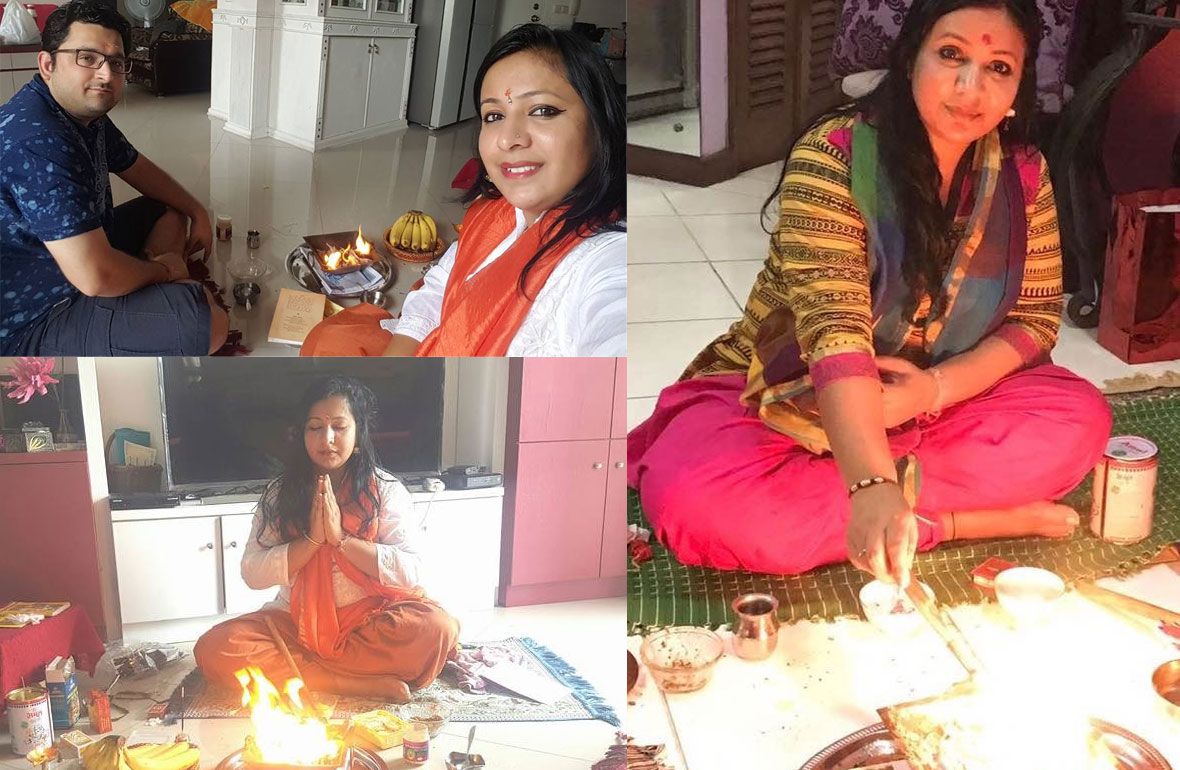
It was during this phase that something quietly significant happened. Without any grand declaration or intention to challenge societal norms, she stepped into a space that had long been considered out of bounds. She began to learn the intricacies of havan—the mantras, the procedures, the discipline it required—not as an observer, but as a practitioner. And then, one day, she performed a havan herself. There was no dramatic turning point, no moment designed to make a statement, yet what she did carried a weight far greater than it seemed. In that simple act, she crossed an invisible boundary that had existed for generations, becoming what today would be recognized as a female priest performing havan, a role that is now gaining acceptance but was once rarely acknowledged.
Women Empowerment in Religion: Facing Resistance in Earlier Times
The response, as expected, was not immediate acceptance. Traditions, especially those intertwined with faith, do not change easily. There were questions, there were doubts, and there was a quiet resistance that often accompanies anything unfamiliar. At a time when conversations around women empowerment in religion were not widely accepted, her actions were seen by some as stepping beyond what was considered appropriate. In those days, a woman leading a havan was not just unusual—it was, for many, uncomfortable to accept. But Kanika did not respond with arguments or defiance. She chose instead to continue with sincerity, allowing her dedication and understanding to speak for her. Over time, what once seemed unusual began to be seen differently—not as a disruption, but as a natural evolution in women in spiritual leadership.
Hindu Rituals Abroad: Building Cultural Connection in Indonesia
In Jakarta, her journey gradually became more than a personal exploration of faith. She became a bridge between cultures, helping people stay connected to their roots while living far from home. Through her involvement in community spaces and cultural initiatives, she contributed to the preservation and sharing of Indian traditions, language, and spiritual practices. In doing so, she was not just performing rituals; she was creating a sense of belonging for those navigating life between cultures. Her work reflects what is now widely recognized as Hindu rituals abroad, where traditions travel across borders and continue to thrive in new environments.
 Then vs Now: Changing Acceptance of Women in Hindu Rituals
Today, the world stands at a different point. Conversations around equality, inclusion, and identity have found a stronger voice, and the idea of a female priest or a woman performing havan no longer carries the same disbelief it once did. It is becoming more accepted, more visible, and more normalized. The presence of women in Hindu rituals is slowly being embraced, and spirituality is evolving into a more inclusive space. Yet, it is important to remember that there was a time when such acceptance did not exist, when the path was uncertain and the courage required was far greater than it appears today.
A Story of Faith, Not Rebellion
Stories like that of Kanika Rajpurohit remind us of that transition. They take us back to a period when the boundaries were more rigid, when stepping beyond them required quiet strength. Her journey does not stand out because it was loud or confrontational, but because it was steady, rooted, and sincere. She did not seek to change tradition; she simply chose to engage with it fully, and in doing so, she allowed it to expand. Her story today resonates deeply with themes of female spiritual leadership and the evolving role of women in cultural traditions.
The Sacred Fire That Changed Perception
A havan, at its core, is a ritual of offering—a connection between the individual and the divine, carried through fire, sound, and intention. When someone steps into that space with authenticity, the essence of the ritual remains unchanged, even if the person performing it does not fit the traditional mold. And perhaps that is where the true shift lies—not in altering the ritual itself, but in redefining who is allowed to stand before the sacred fire. What was once questioned is now becoming a symbol of acceptance.
From Bikaner to Indonesia: A Journey Beyond Boundaries
In the quiet continuity of her journey, from the spiritual lanes of Bikaner to the multicultural landscape of Jakarta, there exists a story that is both personal and collective. It speaks of a time when certain roles were unquestioned, of a moment when those roles were gently challenged, and of a present where the boundaries are slowly dissolving. It is not a story of rebellion, but of presence; not of breaking away, but of stepping in. And somewhere in that space, between what was and what is becoming, the sacred fire continues to burn—steady, inclusive, and ever-evolving.
FAQs
- What is a havan and why is it significant?
A havan is a sacred Hindu ritual where offerings are made into a consecrated fire while chanting mantras. It symbolizes purification, devotion, and a connection between the individual and the divine.2. Were women historically not allowed to perform havan in India?
Traditionally, havan and other Vedic rituals were predominantly led by men, especially priests. While there was no formal legal restriction, social customs and interpretations of religious texts limited women’s roles. Women actively participated through preparation and devotion, but rarely led the rituals themselves.3. Who is Kanika Rajpurohit?
Kanika Rajpurohit is an example of a woman who quietly stepped into performing havan, especially while living abroad, reflecting a broader shift toward inclusion in spiritual practices.4. How did her journey begin?
Growing up in Bikaner, she was deeply influenced by spiritual rituals. Later, after moving to Jakarta, she began learning and eventually performing havan herself, especially within the Indian community abroad.5. Did she face resistance for performing havan?
Yes, like many who step into traditionally restricted roles, she faced questions and hesitation. However, her consistent practice and sincerity gradually helped build acceptance.6. Is it common today for women to perform havan?
Today, it is becoming increasingly common. More women are stepping into roles of spiritual leadership, and society is gradually embracing their presence in rituals.

About Story of Souls
Leave your comments on how you like this story. If you love it, share it to bring that change we wish to see in the world.
You can also share your inspiring story with us at submitstories.storyofsouls@gmail.com. Story of Souls is an initiative where we invite people to bring their stories to us. We want people to “write to heal.” The idea of Storyofsouls is appreciated by ALL INDIA RADIO. An Online Platform where you can share your real-life stories. The impact of our stories has reached the UN and Harvard University. For some real-life stories, web series are also planned. You can also visit our YouTube channel. You can follow us on Facebook LinkedIn Instagram.
Storyofsouls is glad to inform you that we are now a Google News-verified platform.
We are proud to inform you all that storyofsouls.com is the official TEDx MotiJheel Kanpur Partner for their upcoming event.